Nội dung chính
Vietnam’s fish‑meal export reaches US$300 million in 2025, with China as the world’s biggest buyer
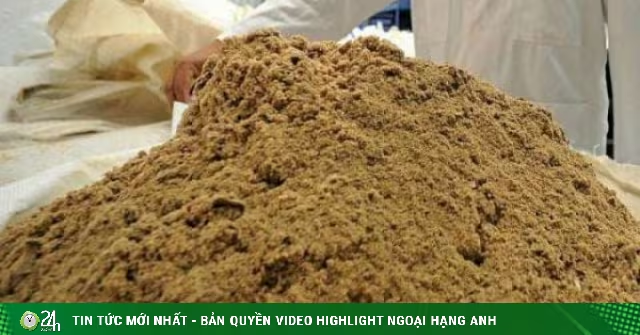
At the 2025 Year‑End Review conference of the Department of Fisheries and Aquaculture, Nguyen Hoai Nam – Secretary‑General of the Vietnam Seafood Processing and Export Association (VASEP) confirmed that Vietnam’s fish‑meal export value reached approximately US$300 million in 2025. The figure reflects only the portion recorded under the fisheries sector, excluding domestic consumption, and underscores a massive growth potential.
Why fish‑meal matters – applications and value chain
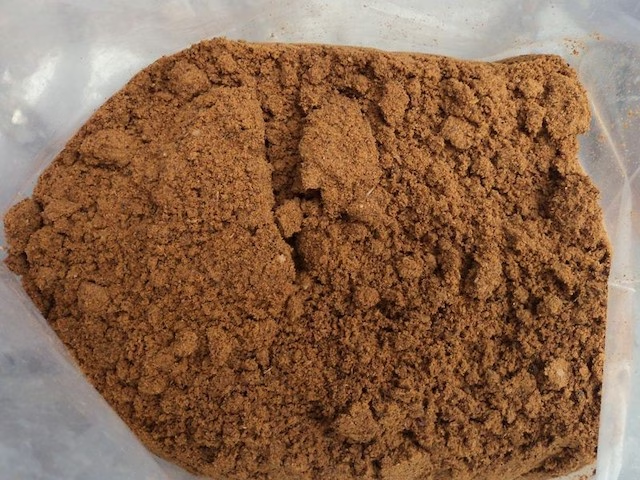
Fish‑meal is a high‑protein, amino‑acid‑rich ingredient widely used in livestock, poultry, aquaculture and even pet feed. It also serves as an organic fertilizer that improves soil fertility and crop yield. Because of its nutritional density, it contributes to faster growth and higher productivity in animal husbandry.
Global demand: Peru, China and the rest of the world
Peru remains the largest producer and exporter of fish‑meal, accounting for roughly 20 % of global output, mainly from anchovy catches. China, however, dominates the import side, absorbing about 90 % of the world’s fish‑meal supply.
Vietnam’s seafood production – a solid raw‑material base
According to the Department of Fisheries and Aquaculture, total seafood production hit 9.95 million t in 2025, a 3 % rise from 2024. Of this, cultivated seafood reached 6.1 million t (up 5.1 %), while capture fisheries stood at 3.83 million t.
Correspondingly, the domestic feed industry produced 5.39 million t of aquaculture feed in 2025, including 1.4 million t for shrimp, 2.02 million t for pangasius and 1.97 million t for other species.
Key players turning waste into revenue
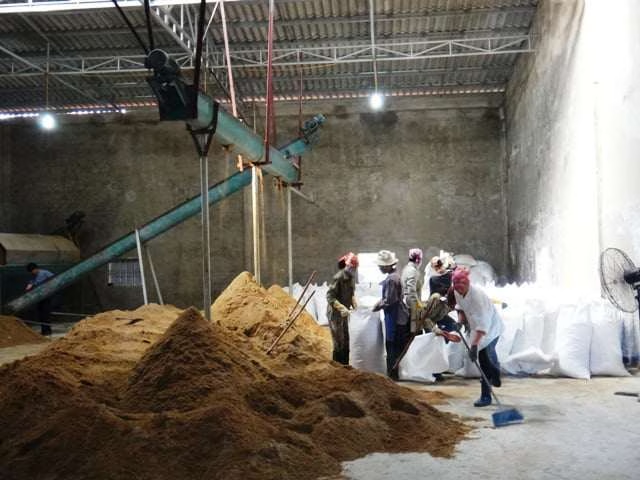
Phuc Loc Co., Ltd. (Tân Hải, HCMC) buys around 60 t of fish‑waste daily and transforms it into 4,000‑5,000 t of fish‑meal per year, generating revenue of VND 72‑90 billion. With access to modern technology, the company aims to raise protein content to 64 % and cut national imports by 140,000 t annually.
Tu Hai Co., Ltd. (Phước Thắng) processes shrimp heads that once sold for a few thousand VND/kg; today the cleaned product is exported to Japan at US$10/kg, bringing in VND 10‑12 billion per year. The firm also explores new markets for value‑added shrimp by‑products.
The Southern Institute of Marine Research is pioneering the extraction of chitosan, peptides and biodegradable packaging material from crab shells and fish skins, targeting price points of up to US$1,000/kg for pharmaceutical and cosmetic applications.
Future outlook – 2030 and beyond
Projections suggest that by 2030 Vietnam will produce 7 million t of cultivated seafood, generating an estimated 650,000 t of shrimp by‑products (valued at US$80‑100 million) and 1.3 million t of pangasius waste (over US$500 million).
According to Prof. Pham Quoc Huy, head of the Southern Institute of Marine Research, turning by‑products into high‑value ingredients requires a dedicated industry framework, supportive tax and green‑credit policies, and strong collaboration between businesses, scientists and government agencies.
When these elements align, what is today considered “waste” can become “green gold”, driving a circular marine economy, protecting ocean health, and elevating Vietnam’s position on the global seafood map.